
Public Health Alert: Understanding and Preventing Marburg Virus Disease in Ethiopia
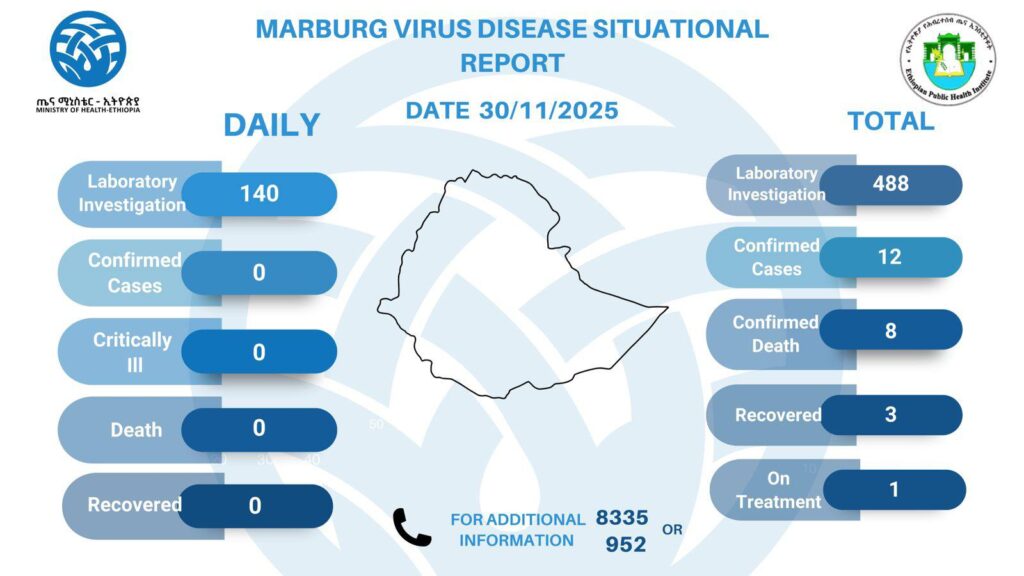
Ethiopia’s commitment to public health remains a national priority, yet we must be vigilant against emerging threats. The Federal Ministry of Health and the Ethiopian Public Health Institute (EPHI) have recently confirmed an outbreak of Marburg Virus Disease (MVD) in parts of the South Ethiopia and Sidama regions.
Marburg is a severe illness that, like Ebola, belongs to the family of hemorrhagic fevers and requires immediate, coordinated action to contain. Understanding this virus, its risks, and the clear protective measures is the most critical step you can take for your health and community safety.
What is Marburg Virus Disease (MVD)?
Marburg Virus Disease is a highly contagious and severe viral hemorrhagic fever. It is one of the deadliest pathogens known, with a high fatality rate.
1. The Source and Transmission
MVD is initially transmitted to people from fruit bats (specifically the Rousettus aegyptiacus species), often found in caves or mining areas.
Once a person is infected, the virus spreads through human-to-human transmission via direct contact with:
-
The blood, body fluids (urine, saliva, sweat, feces, vomit, breast milk, semen) of an infected person.
-
Surfaces and materials (like bedding or clothing) contaminated with these fluids.
-
Contact with the bodies of those who have died from MVD, particularly during burial practices.
Important: MVD is not spread through the air (airborne transmission). An infected person is only contagious once they start showing symptoms.
2. Recognizing the Symptoms
Symptoms are often abrupt and severe, typically appearing 2 to 21 days after exposure. Early detection and immediate medical care are essential for survival.
Early Symptoms (Often called “Dry” Symptoms):
-
High fever
-
Severe headache
-
Muscle aches and malaise (general feeling of being unwell)
-
Chest pains
Later Symptoms (More Severe, Often Called “Wet” Symptoms):
-
Severe diarrhea and vomiting
-
Unexplained bleeding or bruising (from the nose, gums, eyes, or in vomit/stool)
-
Jaundice (yellowing of the skin and eyes)
-
Severe weight loss
-
Signs of organ failure
Essential Protective Measures to Contain the Spread
The government and health partners are mobilized, but personal and community vigilance is the most effective defense. Follow these steps rigorously to protect yourself and your loved ones:
A. Personal Hygiene and Sanitation
-
Hand Hygiene is Paramount: Wash your hands frequently and thoroughly with soap and clean water for at least 20 seconds, especially:
-
After being in public places.
-
After coughing or sneezing.
-
Before preparing or eating food.
-
After using the toilet.
-
-
Avoid Touching Your Face: Do not touch your eyes, nose, or mouth with unwashed hands.
-
Respiratory Etiquette: Cover your mouth and nose with a tissue or the inside of your elbow when you cough or sneeze. Immediately dispose of used tissues safely in a closed bin.
B. Community and Environmental Safety
-
Avoid Contact with Bats and Primates: Limit exposure to areas where fruit bats live, such as caves, mines, and forests. Never handle or consume bushmeat, particularly from primates or forest antelopes.
-
Safe Burial Practices: Do not touch the body of anyone who has died from suspected or confirmed MVD. Only trained and equipped response teams should manage burial practices to prevent further transmission.
-
Practice Social Distancing in Affected Areas: Minimize unnecessary social interactions and avoid crowded public gatherings in regions where cases have been confirmed.
C. Guidelines for Care and Isolation
-
Isolate the Sick: If a family member shows MVD symptoms (especially fever and severe headache), they must be isolated immediately.
-
Seek Medical Help Safely: Do not go directly to a clinic or hospital without calling ahead. Contact the designated regional toll-free lines or the nearest health facility for guidance. This ensures health workers can prepare safely to receive the patient.
-
Use Protection for Caregiving: If you must care for a sick person, use protective measures like gloves and a medical mask. Use separate eating utensils, and clean and disinfect contaminated surfaces frequently with bleach or 70% alcohol solution.
Frequently Asked Questions (FAQs) about MVD
|
Question |
Answer |
|---|---|
|
Is there a vaccine or cure for MVD? |
Currently, there are no FDA-approved vaccines or specific treatments. However, supportive care (like fluid replacement and managing symptoms) can significantly improve the chance of survival. Investigational vaccines are being deployed for high-risk groups, such as health workers. |
|
How long is the incubation period? |
The time between infection and the onset of symptoms (incubation period) ranges from 2 to 21 days. |
|
Can I travel within Ethiopia? |
The CDC has issued a Level 1 Travel Health Notice, advising usual precautions for travelers to Ethiopia. However, you should strictly avoid the immediate outbreak areas and monitor your health for 21 days after leaving any affected region. |
|
What should I do if I suspect someone has MVD? |
Do not touch them or their body fluids. Immediately call the Ethiopian Public Health Institute (EPHI) hotline or the nearest health authority. Provide accurate information to the response teams. |
|
How does MVD compare to COVID-19? |
MVD is much deadlier than COVID-19 but is much harder to catch because it is only spread through direct contact with body fluids, not general airborne particles like COVID-19. It requires intimate, direct contact. |
Vigilance and community cooperation are the keys to containing Marburg Virus Disease. By following these simple but critical infection prevention practices—especially diligent hand hygiene and safely reporting suspected cases—we can protect Ethiopia’s public health.
Stay informed by checking updates from the Federal Ministry of Health and the Ethiopian Public Health Institute.